
Good Samaritan Free Health Center
Garrett Rogers, Summer 2015
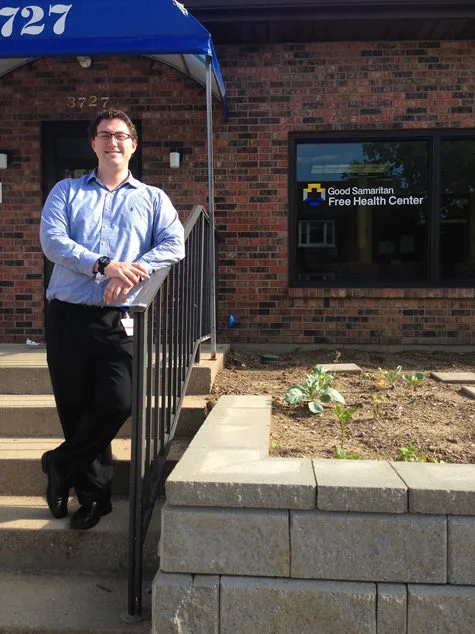
My experience at the Good Samaritan Free Health Center (GSFHC) was nothing short of fantastic. I spent my summer as an intern in the Community Health Office. My job was to help patients navigate the healthcare system. To put it another way, once a doctor ordered something for the patient, it was my job to make sure they got it. For example, when a patient got a referral to see a specialist, I first started off by helping the patient apply for financial assistance programs. After that, I'd gather as much information as I could about a patient's availability, and then make an appointment on their behalf. Then I would call the patient before and after the appointment to first make sure they didn't need help making it to their appointment, and then afterwards to learn what other follow-up care they may have needed. From this process I learned a lot about insurance, Medicaid, and how much behind the scenes work must be done for something as relatively simple as scheduling an appointment. It really impressed upon me how many more hoops patients without insurance need to jump through in order to receive care that I find commonplace. Second, it stressed the importance of effective coordination of care, especially when working with doctors from different practices than your own. For example, GSFHC uses a different system than the University of Cincinnati, so when we refer patients to them for care, we don't gain access to their charts. Thus, calling the patient soon after the appointment, when their memory of the encounter is still fresh, becomes vital for maintaining an overarching picture of the patient's health.
While my daily activities predominantly revolved around making phone calls and meeting one-on-one with patients to schedule appointments, I was given lots of smaller projects that really showed the breadth and quality of care that the clinic offers. For example, every Wednesday I cleaned and packaged vegetables for the Healthy Harvest food program that was started by a previous UHP intern. The fresh vegetables and recipe cards are placed in the waiting room for patients to take with them and improve their diet. Sometimes projects involved quality improvement efforts. This summer I analyzed the attendance data and showed that we had a 10% increase in the number of Spanish-speaking appointments. This is being used as a catalyst to further improve our translating resources. Opportunities such as this helped to understand how serving a patient means more than just fixing their immediate problem. Creating a coordinated plan where you focus on both problem solving and preventative medicine greatly improves patient experiences and outcomes. Furthermore, those at GSFHC treated every patient with care and compassion from the second they walked through the door. This humanization of the patient happens through the kindness shown and is demonstrated in the hundreds of volunteers that allow the clinic to function. I had a wonderful experience at GSFHC, and I plan on becoming one of the many volunteers that give their time to make this incredible place run.